ServicesBattery Storage
Battery Storage in Woods Cross
A home battery holds the solar power your panels make during the day so you can use it in the evening or when the grid goes down. We size each system to your real usage, so the cost you pay now still makes sense ten and twenty years out.
When a battery is the right call
A battery earns its place when it changes how much grid power you buy, or when keeping certain circuits running through an outage matters to you. In Utah, power you send back to the grid is generally credited at less than what you pay for power you buy, so storing your own midday solar for evening use often stretches the value of every panel.
Storage does not pay off in every house. A modest monthly bill or a small array can leave a battery partly empty for much of the year. When that is the case, we say so during the call instead of selling you equipment that will not earn back its cost.
We are licensed in all states served, and every battery we install carries the same 25-year warranty on all solar and battery products that covers our panels. That long coverage is a big part of how we weigh a battery against its up-front cost.
What our battery work includes
Usage review
We look at a year of your utility bills and your solar production to see when you use power and when you make it. That gap is what the battery is meant to fill.
Sizing and backup planning
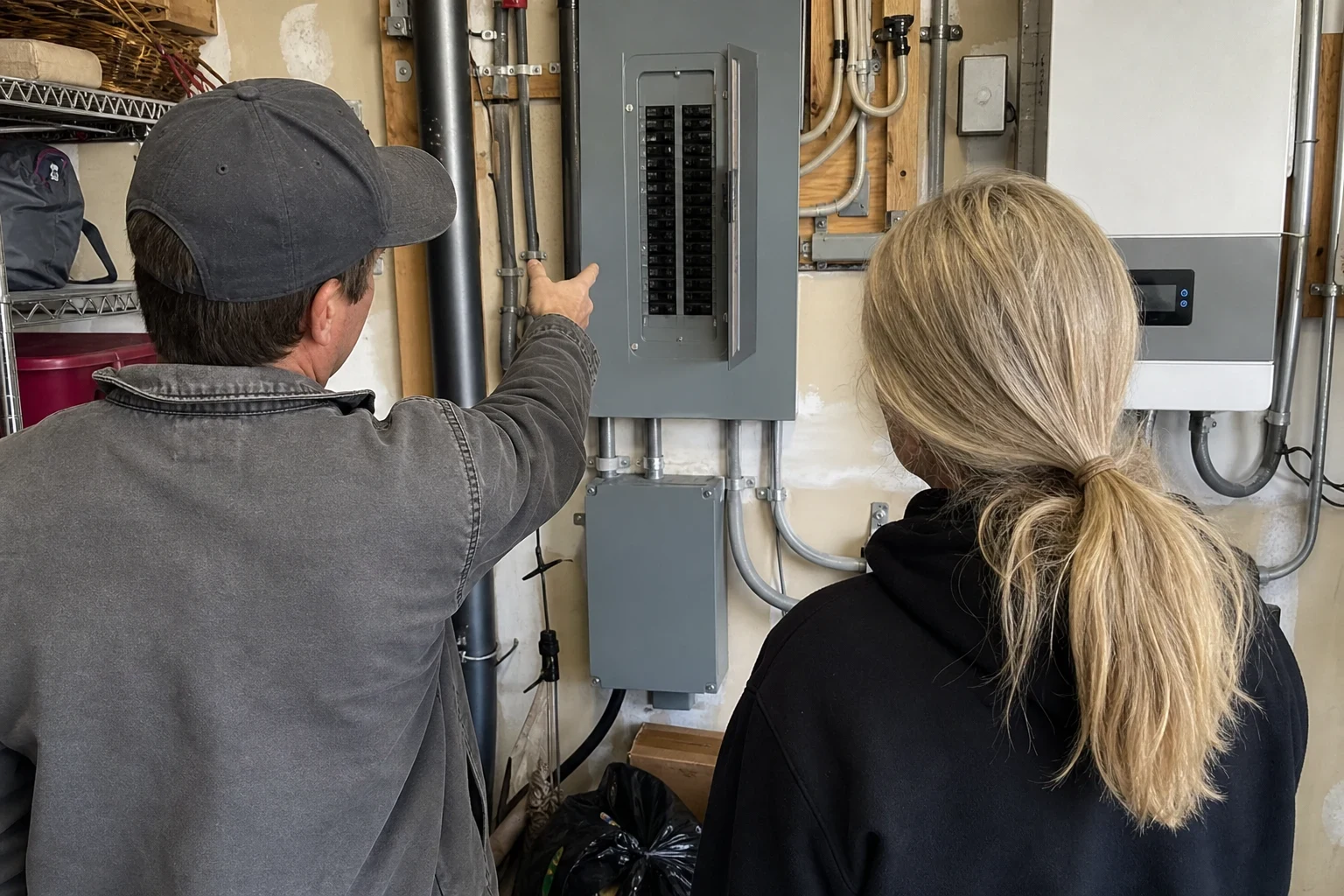
We decide with you which circuits stay on during an outage, such as the refrigerator, furnace fan, well pump or a home office. Backing up the whole house costs more, so we show you both options side by side.
Equipment selection
We favor lithium iron phosphate batteries for their long cycle life and stable chemistry. We explain how capacity, power output and expected lifespan compare across the models we offer.
Placement and mounting
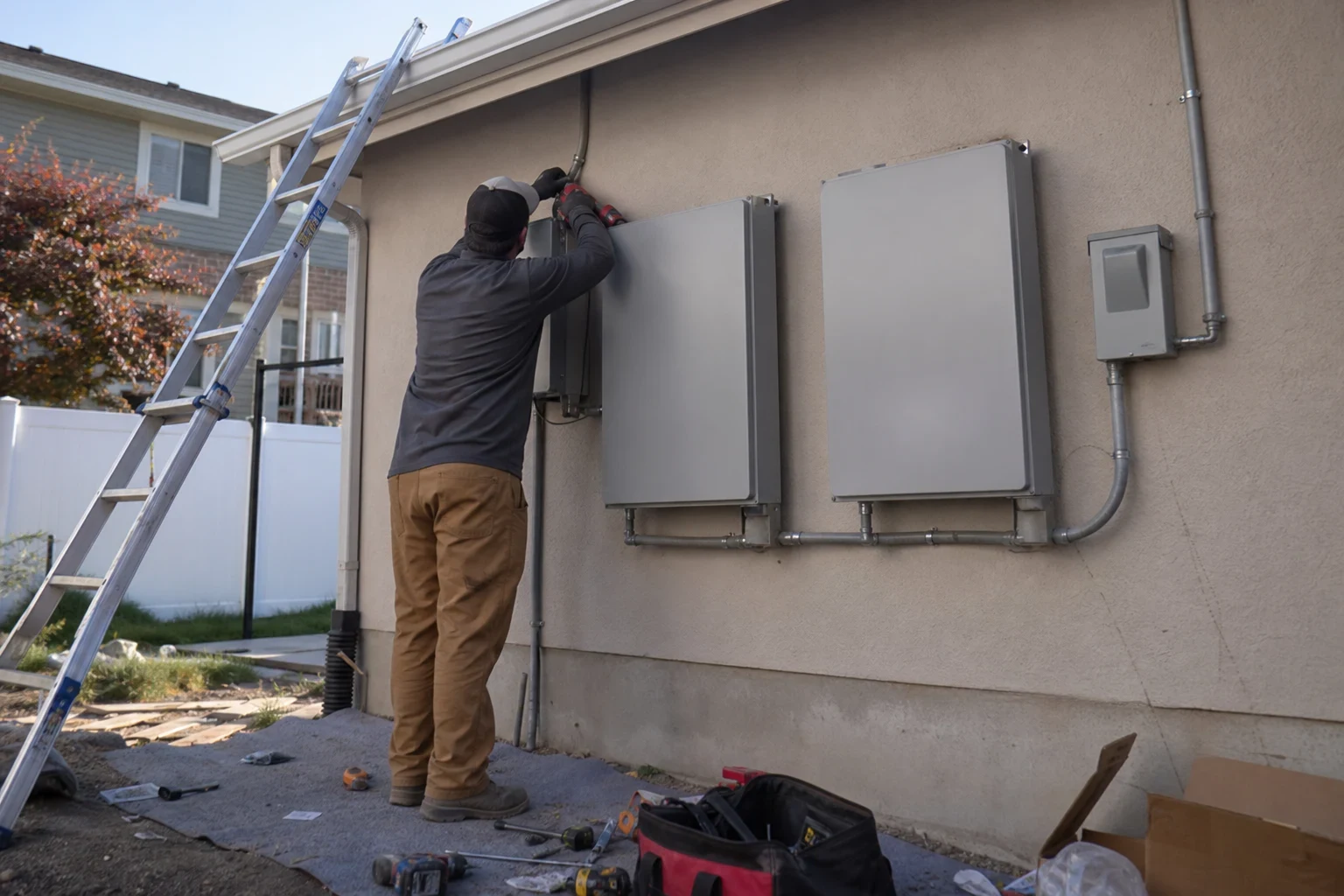
Most batteries go on a garage wall or an exterior wall near your main panel. We pick a spot that stays within the unit's temperature range and leaves clearance for service.
Wiring, permit and inspection
We handle the electrical permit, install the backup panel and transfer equipment, and meet the inspector. The battery is not switched on until the inspection passes.
Setup and walkthrough
Before we leave, we choose the operating setting that fits your goals and get the monitoring app running on your phone. We go through its screens together so the daily charge and discharge make sense to you.
Signs a battery may be worth it for your home
- Your export credits feel small
- If your solar sends a lot of power back to the grid at midday and your bill still climbs in the evening, storing that power yourself usually holds more value.
- Outages disrupt your routine
- Winter storms and summer heat can knock power out for hours. A battery keeps the circuits you chose running without a generator or fuel.
- Someone at home relies on power
- Medical equipment, a sump pump or working from home can make a few hours of backup more than a convenience.
- You are planning solar now
- Adding a battery during a new solar panel installation shares one permit, one inspection and much of the wiring work, which often costs less than adding it later.
- An electric vehicle or heat pump is coming
- Bigger evening loads shift when you use power, and a battery can carry some of that load from your own solar.
How a battery installation runs
- 1
Phone call and savings analysis
We start with a free solar savings analysis by phone or a free virtual appointment. You share your bills, we model what a battery would change, and you get a clear yes, no or not yet.
- 2
Site check and written proposal
We confirm your electrical panel, wall space and wiring route. You receive a line-item proposal showing the equipment, the backup plan and the expected lifespan.
- 3
Permit
We file the electrical permit and any utility paperwork. You do not need to deal with either office.
- 4
Install day
Most battery installs take a single day. Your power goes off for a stretch while the battery is connected at the main panel, and you will know those hours before we arrive. We lay down floor protection, keep cuts tidy and take our packaging with us.
- 5
Inspection and turn-on
After the inspector signs off, we power up the system, test a simulated outage with you and set up monitoring.
What moves the cost of battery storage
Two things shape most of a battery quote: the amount of backup you ask for and the current state of your home's wiring. Every piece of equipment and labor gets its own line on a written proposal, so no new charges turn up after you agree. We also offer $0 up front, so you can judge the system by what it saves across its life instead of by its sticker.
- Storage capacity
- Each added kilowatt-hour stretches outage coverage and evening use, and each added unit adds to the price. We match capacity to what your bills show, not to the biggest model on the list.
- Partial or whole-home backup
- Keeping a handful of essential circuits powered calls for a smaller battery and simpler wiring. Covering the entire house usually takes more capacity and a higher power output.
- Electrical panel condition
- In some homes the main panel is older or has no free breaker slots. When that happens, the panel is replaced or a dedicated backup subpanel goes in first, and only then is the battery connected.
- Existing solar or new system
- Pairing a battery with panels you already own can require different inverter equipment. Putting the panels and battery in together tends to bring the combined cost down.
Battery storage questions
- How long will a home battery last?
- Lithium iron phosphate batteries are built for thousands of charge cycles, and their capacity fades slowly over many years. The battery is also covered by our 25-year warranty on all solar and battery products, which is why we treat it as a long-term part of your home.
- Can I add a battery to the solar system I already have?
- In most cases, yes. We check your inverter and panel to see whether the battery can connect directly or needs added equipment. You will know which before you commit to anything.
- Will a battery run my whole house during an outage?
- It can, with enough capacity and power output. Many homeowners choose a smaller system that keeps essentials running, such as the refrigerator, furnace fan, lights and internet. We show the cost of both so you can decide.
- Does a battery need maintenance?
- Very little. It manages its own charging, and the monitoring app alerts you if something needs attention. Keeping the area around it clear and dry is the main thing you do.
- Does the cold affect a battery in a garage?
- Batteries have a set temperature range for charging, and some models include built-in heating. We choose a location and a model suited to winter temperatures in your garage or on your wall.
See what a battery would do for your bills
We will look at your usage, explain whether storage makes sense and walk you through the numbers over its full lifespan. If you refer a friend who goes solar, you earn $1,000 for every referral that goes solar.